Introduction
The first time I made bread pudding, it was one of those cozy, gray Sundays where the whole house smelled like butter and nostalgia. I was cleaning out the bread basket (translation: rescuing a few slightly tragic slices), and the idea of turning leftovers into something warm and golden felt like a small kitchen miracle. I whisked eggs and milk, tossed in vanilla, a flurry of cinnamon, and honestly—by the time the custard hit the pan, the room already felt warmer. The oven door closed with a soft whoosh, and I waited while the top bloomed into a glossy, toasty crust and the center set into a custard that wobbled like a good secret.
To be real, my first attempt wasn’t perfect. I used super fresh bread, didn’t toast it, and ended up with a delicious but slightly mushy situation. Edible? Absolutely. Elegant? Not exactly. The fix was simple: dry bread, a brief soak, and a drizzle of melted butter over the top for that caramel-kissed finish. That’s the thing about bread pudding—there’s plenty of room for oops moments. It’s forgiving. It doesn’t need fancy technique. And the result tastes like your favorite memory showed up to give you a hug.
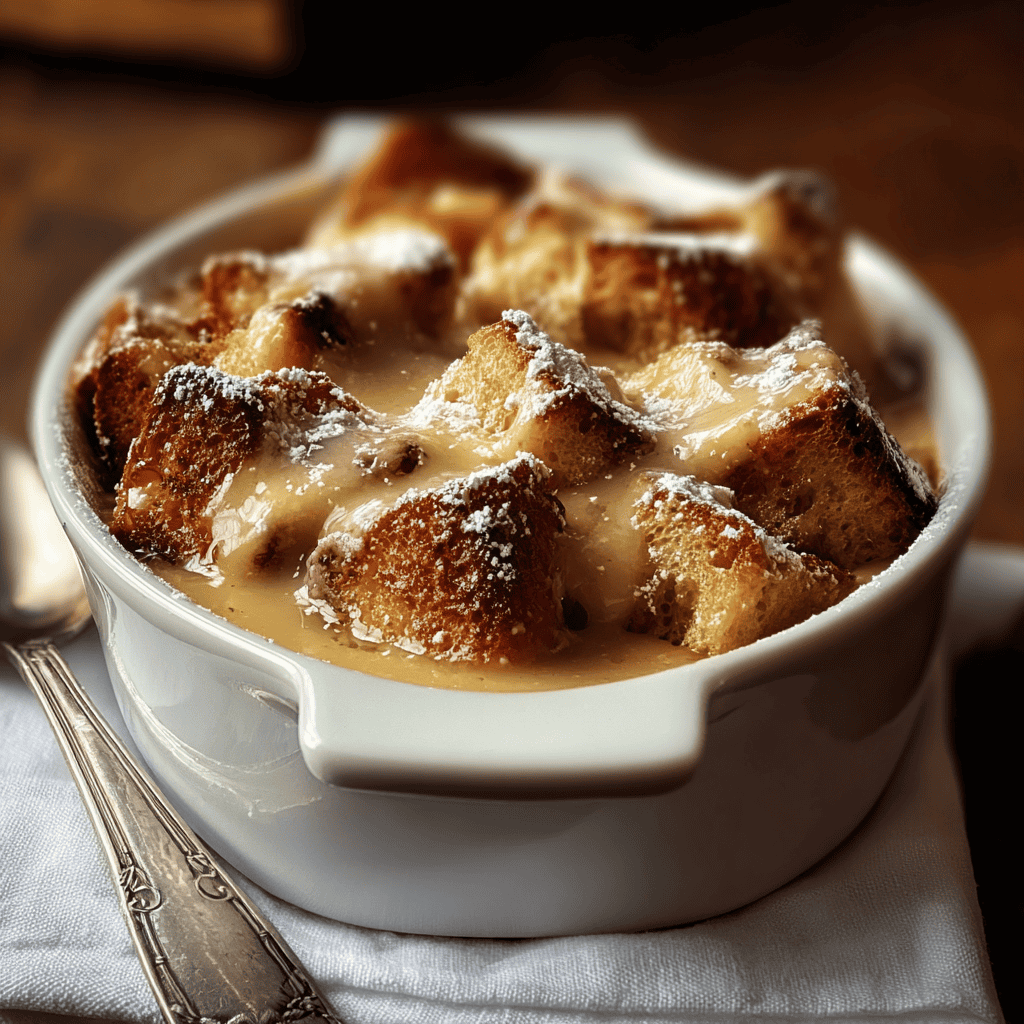
This version leans into the classics: day-old French bread or brioche, a custard that’s sweet but not cloying, a whisper of nutmeg, and raisins if you love that old-school bakery vibe. Then there’s the vanilla sauce—silky, warm, and just thick enough to slide slowly over each square. The sauce is what makes the whole plate feel like diner dessert meets holiday nostalgia.
I love serving this after easy weeknight dinners when everyone’s still lingering at the table, or as a simple finale to a brunch spread that nods playfully to a full english breakfast (bacon-free, obviously). It’s wildly cozy, wonderfully practical, and shines in the realm of budget-friendly recipes. It also fits my vibe of real-life cooking—no stress, just joy. If your week is full of meal planning and quick family meals, tuck this dessert into the plan as your reward. Think of it as the soulful counterpoint to your high protein meals and carefully mapped protein eating plan. Balance tastes like vanilla and cinnamon tonight.
Why You’ll Love This Recipe
- Pantry staples transform into something bakery-level with almost zero effort.
- The center is custardy and lush, while the top bakes golden and lightly crisp.
- A warm vanilla sauce turns each serving into a diner-style dessert moment.
- Perfect for make-ahead; reheat beautifully for company or lazy evenings.
- Customizable with fruit, chocolate, or nuts—your leftovers, your rules.
- Comforting, nostalgic, and exactly the kind of dessert that “feels like a hug in a bowl.”
What Makes This Recipe Special?
This is an old-fashioned dessert made modern by the little details. Dry bread cubes soak in a cinnamon-vanilla custard just long enough to drink it in without falling apart. A drizzle of melted butter across the top gives you caramelized corners and buttery perfume. The vanilla sauce is silky and simple—no fuss, just whisk, warm, pour. Every bite tastes like a cozy café, and the texture balance is dreamy: crisp edges, plush interior, and that glossy sauce ribboning over the top.
Bread pudding also fits beautifully into a real-life routine that includes best meal prep plans and good meal prep plans. Bake it tonight, reheat a square tomorrow, and enjoy something sweet next to your organized world of meal prep microwave lunches and best meals to prep. It’s the dessert that doesn’t demand perfection—just a spoon and a quiet minute.
Ingredients
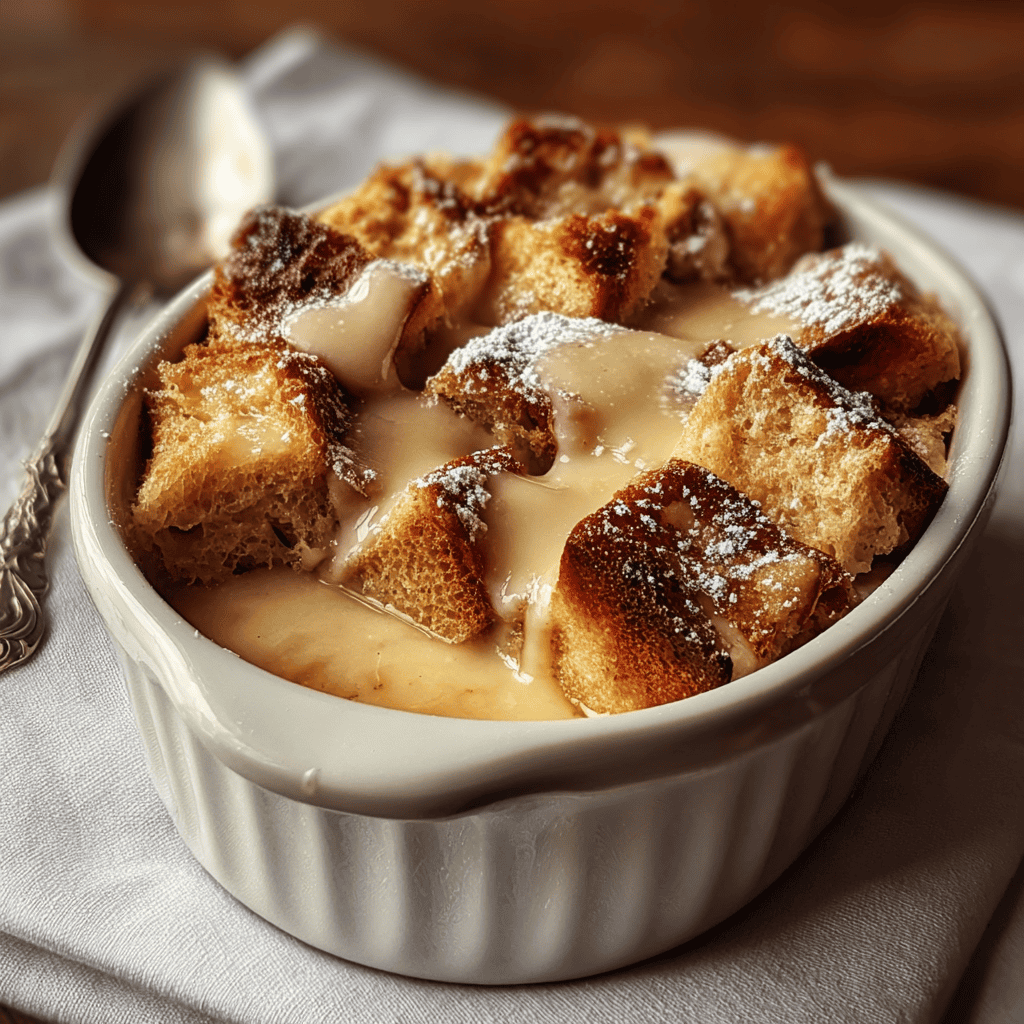
Day-old bread (French, brioche, challah, or sturdy sandwich bread): Slightly stale bread is ideal because it soaks up custard without collapsing. Brioche and challah bring rich flavor; French bread brings structure. If you only have fresh bread, toast it in the oven to dry it out.
Eggs: The backbone of the custard. They set softly and give that beautiful wobble. Use large eggs for reliable results.
Whole milk or half-and-half: Whole milk yields a lighter custard; half-and-half makes it richer. You can split the difference or use a blend.
Heavy cream (optional but lovely): For extra decadence, swap part of the milk for cream. The mouthfeel becomes almost crème-brûlée soft.
Sugar: Just enough to sweeten the base without turning it into cake. White sugar keeps flavors clean and lets the vanilla shine.
Vanilla extract: The soul of the dessert. If you have vanilla bean paste, a teaspoon makes the flavor bloom.
Ground cinnamon & a whisper of nutmeg: Warm spice that makes the kitchen smell like a bakery. Nutmeg is optional but magical in small amounts.
Salt: A pinch sharpens the sweet and deepens the custard. Don’t skip it.
Butter (melted): A quick drizzle across the top gives golden, buttery corners.
Raisins or other dried fruit (optional): Classic and cozy. You can also fold in chopped dates, apricots, or dried cranberries.
For the vanilla sauce: Butter, sugar, cream or whole milk, egg yolk or cornstarch for thickening, vanilla extract, and a pinch of salt. The sauce should be pourable and glossy, not gloopy.
Brand & pantry notes:
Use real vanilla if you can—either pure extract or paste. For dairy, any reliable grocery brand works; richness matters more than labels. If using plant-based milk, choose unsweetened varieties so the sugar balance stays true.
Don’t do this:
Don’t use super soft, fluffy bread straight from the bag without drying; it can turn gummy. Don’t over-soak until the bread collapses completely. Don’t skip greasing the pan. And please don’t boil the sauce—egg yolk can curdle or cornstarch can turn gluey.
How to Make It Step-by-Step
1) Prep the pan and bread.
Grease a 9×13-inch baking dish. Cut day-old bread into generous cubes—about 1- to 1½-inch pieces. Scatter them into the dish. If adding raisins or dried fruit, sprinkle them between the cubes so every scoop gets a little surprise.
2) Make the custard.
In a big bowl, whisk eggs until smooth and golden. Add milk (or a mix of milk and cream), sugar, vanilla, cinnamon, a tiny pinch of nutmeg, and salt. Whisk until the sugar dissolves and the custard smells like a latte in December.
3) Soak without drowning.
Pour the custard over the bread. Use a spatula to press gently so the top cubes take a sip, too. Let it sit 10–15 minutes. You want the interior cubes saturated but still structured. If the corners look dry, ladle a bit of custard over them like a tiny waterfall.
4) Butter finish.
Drizzle melted butter across the surface. It will pool in little craters and bake into a burnished, buttery sheen. You’ll feel like a genius. Because you are.
5) Bake to golden.
Slide the pan into a 350°F (175°C) oven. Bake 45–50 minutes. Listen for the soft bubbling at the edges. Peek at 40 minutes—if the top is browning too fast, tent loosely with foil. It’s done when the top is deeply golden and a knife inserted in the center comes out mostly clean. The middle should tremble slightly; it will set more as it cools.
6) Rest (yes, really).
Let the pudding stand 10 minutes. This is the hardest part, but resting keeps the slices neat and the custard silky. Breathe in the cinnamon steam. Try not to cut a corner. (I fail at this regularly.)
7) Make the vanilla sauce.
While the pudding bakes—or as it rests—melt butter in a small saucepan. Stir in sugar and cream (or whole milk). If you’re using an egg yolk, whisk it in off the heat first, then return to low heat, stirring constantly until it thickens slightly—think light syrup, not pudding. If you prefer cornstarch, whisk cornstarch with a splash of milk first to make a slurry, then add and simmer gently for 1–2 minutes until glossy. Remove from heat and stir in vanilla and a pinch of salt. Do not let it boil. It should coat the back of a spoon and drip slowly.
8) Serve like a diner pro.
Cut warm squares and slide onto plates. Spoon vanilla sauce over the top and watch it cascade into the nooks. The edges will stay a little crisp while the center sings custard. If you hear happy sighs around the table, that’s normal.
What you’ll see, smell, and hear:
The oven will carry cinnamon-vanilla perfume down the hallway. You’ll see the top go from pale to toast-colored and glistening. You’ll hear that subtle bubbling at the sides toward the end—my favorite “it’s almost ready” cue. When you press lightly in the center, it feels pillowy, not wet.
Lessons learned (so you don’t have to):
I once poured the custard and immediately baked—no soak—and the top turned out great while a few inner cubes stayed a little dry. The 10–15 minute soak changed everything. I also once boiled the sauce (oops). It broke. Low and slow is the move. Stir like you mean it, and pull it the moment it looks glossy.
Room to riff:
Fold in chopped chocolate for melty pockets. Swap raisins for diced apples and a hint of lemon zest. Use cinnamon-raisin bread when you’re feeling classic, or croissants when you’re feeling fancy. It’s bread pudding—there are no rules, only joy.
Tips for Best Results
- Dry bread is non-negotiable. Toast fresh bread at 300°F for 10–12 minutes to mimic day-old.
- Don’t over-sweeten the custard; the vanilla sauce adds sweetness, too.
- Rest after baking. Ten minutes lets the custard settle for clean slices.
- Keep the sauce gentle—steam rising is fine, boiling isn’t.
- For extra depth, add a teaspoon of vanilla bean paste to either the custard or the sauce.
- If using dried fruit, soak it in warm milk for 10 minutes first so it plumps instead of stealing moisture from the custard.
Ingredient Substitutions & Variations
- Dairy options: Use whole milk plus a splash of cream for richness, or go dairy-free with almond or oat milk and plant-based butter.
- Bread swaps: Brioche is luxe, challah is tender, French bread is sturdy. Croissants create a flaky, buttery pudding.
- Fruit & chocolate: Dried cranberries, chopped dates, or diced apples are excellent. Chocolate chips or chopped dark chocolate melt into pretty streaks.
- Spice profile: Add cardamom for café vibes, or use pumpkin pie spice in fall.
- Sauce glow-up: Add a touch of maple extract to the sauce for a breakfast-y twist.
- Texture tweaks: For a more custardy bite, increase milk by 1/2 cup. For a cakier bite, reduce by 1/4 cup.
If you’re mapping out best dinner prep meals for the week or curating no prep healthy lunches, this dessert can still play along: bake once, enjoy twice. It’s a thoughtful finish next to your world of low calorie high nutrition meals and best meal prep healthy goals.
Serving Suggestions
Serve warm squares with a generous pour of vanilla sauce and a light dusting of cinnamon. A scoop of vanilla ice cream melts into rivers that mingle with the sauce—utter bliss. Fresh berries add brightness and color. For brunch, pair with yogurt and sliced pears for contrast. For a late-night treat, add a dollop of whipped cream and call it a win.
This is dessert therapy after easy weeknight dinners and a sweet note to end a long day of meal planning chicken. It’s the little luxury that keeps healthy eating for two feeling joyful, not strict.
Pairing Ideas (Drinks, Sides, etc.)
- Drinks: Hot coffee, black tea with a splash of milk, or a cinnamon latte. For a lighter option, try cold brew or chai over ice.
- Sides: Fresh berries, caramelized bananas, or a crisp apple salad with lemon.
- Extras: Toasted pecans or walnuts sprinkled on top for crunch.
How to Store and Reheat Leftovers
Cool completely, then store covered in the refrigerator for up to 4 days. The vanilla sauce can be stored separately in a jar; rewarm gently on the stove or in the microwave at half power. Reheat individual slices of bread pudding in the microwave for 30–45 seconds or in a 325°F oven until warmed through.
Avoid reheating at high heat or uncovered for too long—it can dry the top before the center warms. If the sauce thickens too much in the fridge, loosen with a teaspoon of milk.
Make-Ahead and Freezer Tips
Assemble the pudding up to 24 hours in advance, cover, and refrigerate. Bake straight from the fridge, adding a few extra minutes. You can also bake, cool, and freeze in slices for up to 2 months. Wrap well, thaw overnight, and reheat gently. Freeze the sauce separately or make it fresh—it takes minutes and tastes best warm.
Common Mistakes to Avoid
- Using very soft fresh bread without drying it first.
- Skipping the soak—give the custard 10–15 minutes to penetrate.
- Over-baking until the center is firm; a slight wobble is ideal.
- Boiling the sauce; it should never fully boil.
- Cutting immediately—resting makes for clean, custardy slices.
Frequently Asked Questions (FAQ)
What type of bread works best?
Sturdy, slightly stale breads like French bread, brioche, or challah are perfect. They absorb custard without collapsing.
Can I use fresh bread?
Yes, but dry it first. Cube and toast at 300°F for 10–12 minutes to mimic day-old texture.
How do I know when it’s done?
The top should be golden and the center mostly set with a gentle wobble. A knife inserted in the middle should come out mostly clean.
Can I make it dairy-free?
Absolutely. Use almond or oat milk and plant-based butter for both the pudding and the sauce.
Is the vanilla sauce necessary?
Technically no, emotionally yes. It adds silkiness and a diner-style finish that makes each slice feel special.
Can I make a smaller batch?
Yes. Halve the ingredients and bake in an 8×8-inch pan, checking 5–10 minutes earlier.
Can I add nuts or chocolate?
Go for it. Chopped pecans, walnuts, or chocolate chips are lovely.
Can I freeze bread pudding?
Yes. Freeze baked slices or the unbaked assembled pudding. Thaw overnight and reheat gently.
What if I don’t have heavy cream for the sauce?
Use whole milk. The sauce will be slightly thinner but still delicious.
Can I serve it cold?
Totally. Many people love it straight from the fridge, especially with fresh fruit.
Cooking Tools You’ll Need
- 9×13-inch baking dish
- Large mixing bowl and whisk
- Measuring cups and spoons
- Spatula for pressing the bread
- Small saucepan for the vanilla sauce
- Knife for doneness checks and clean squares
Final Thoughts
Bread Pudding with Vanilla Sauce is the dessert equivalent of your comfiest sweater—soft, warm, and just a tiny bit indulgent. It’s the gentle exhale after a long day of quick family meals, the sweet punctuation mark to a week mapped with high macro meals, and a smart move in the world of budget-friendly recipes. It proves that simple pantry ingredients can become something extraordinary with a little time and a lot of love.
Make it for a quiet night in. Make it for friends. Make it because you have bread that’s on its last happy day and you love turning leftovers into something irresistible. And if your sauce gets a little too thick or your top browns faster than you expected—stir in a splash of milk, tent with foil, and carry on. Dessert should be joyful, not stressful.
If you enjoyed this recipe, don’t forget to save it on Pinterest or share it with a friend!
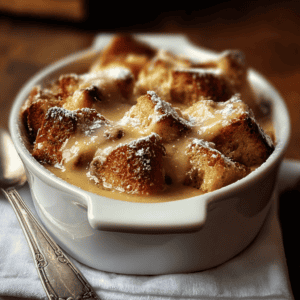
Bread Pudding with Vanilla Sauce
Ingredients
- 6 cups day-old bread, cubed (French, brioche, or challah)
- 2 cups whole milk
- 1 cup heavy cream
- 4 large eggs
- 3/4 cup granulated sugar
- 2 teaspoons vanilla extract
- 1 teaspoon ground cinnamon
- 1/2 teaspoon ground nutmeg (optional)
- 1/4 teaspoon fine salt
- 2 tablespoons unsalted butter, melted (for topping)
- 1/2 cup raisins or dried fruit (optional)
- 1/2 cup granulated sugar (for vanilla sauce)
- 1/2 cup heavy cream (for vanilla sauce)
- 1/4 cup whole milk (for vanilla sauce)
- 1 tablespoon cornstarch (for vanilla sauce)
- pinch fine salt (for vanilla sauce)
- 1 tablespoon unsalted butter (for vanilla sauce)
- 1 teaspoon vanilla extract (for vanilla sauce)
Instructions
- Preheat the oven to 350°F (175°C). Grease a 9×13-inch baking dish.
- Cut the day-old bread into 1–1½-inch cubes and place them in the prepared dish. Sprinkle raisins or dried fruit across the bread if using.
- In a large bowl, whisk together the eggs, whole milk, heavy cream, granulated sugar, vanilla extract, cinnamon, nutmeg (if using), and salt until the sugar dissolves.
- Pour the custard evenly over the bread. Press down gently with a spatula so all cubes absorb the custard. Let stand 10–15 minutes to soak.
- Drizzle the melted butter over the top.
- Bake for 45–50 minutes, until the top is golden and the center is mostly set with a slight wobble. If browning too quickly, tent loosely with foil. Let cool 10 minutes before serving.
- Make the vanilla sauce: In a small saucepan, whisk sugar, heavy cream, and milk. In a separate cup, whisk cornstarch with a splash of the milk mixture to make a slurry; whisk it into the pan.
- Cook over medium heat, stirring constantly, until the sauce thickens and turns glossy, 5–7 minutes. Do not boil. Remove from heat; stir in butter, vanilla, and a pinch of salt.
- Serve warm squares of bread pudding with warm vanilla sauce spooned over the top.